
Many adults have experienced the joy and contentment of being in love. Some people can also admit that when their romantic relationship ends their sense of self turns into outright panic and terror at the thought of losing the person. The fear of losing a loved one is a natural and healthy reaction. It is healthy to experience grief, loss, depression or severe depression for an amount of time following the end of a relationship. What is potentially problematic is when the loss of a relationship threatens your core sense of self or reason to live. What follows is a pattern of obsessional thinking and behavior in order to win back your partner.
Consider if the thought of losing a romantic partner or relationship causes you to change your values, friends, or beliefs in order to keep the person or relationship. A need to change oneself in order to maintain a relationship is a warning sign for love and relationship addiction.
As with alcohol to the alcoholic, drugs to the drug addict or sex to the sex addict, a person or love interest is the “drug of choice.” Love and relationships can be compulsive and addictive. The obsessional focus occurs due to an unhealthy over identification with another’s affection or attention and a focus on the other to fill a void or a lack of self-worth within.
AI Intimate Chatbots and Romantic Companions
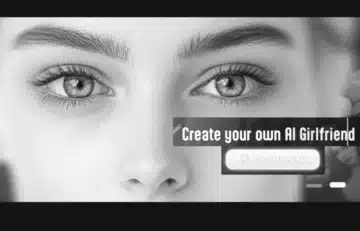
One of the fastest growing sectors within the companion chatbot industry is the romantic companion chatbot or intimate chatbots. AI companions refer to AI generated tools that are designed to simulate human connection, emotional support, conversation, and companionship. A growing concern among users is the use of AI generated intimate chatbots or romantic companions that replace human connection. New platforms are being created everyday but at present, examples of popular platforms include: Replika, Character.AI, Pi, and Nomi. Many utilize more common large language models (LLM) to build a companion or love interest.
Safety advocacy organizations such as Transparency Coalition publicize the risks involved with AI generated conversations and companions. LLMs such as: “ChatGPT, Microsoft Copilot, Meta AI, Grok, and Google Gemini are designed to respond to user prompts in a positive feedback loop between user and chatbot. A companion chatbot is designed specifically to respond to user prompts according to the personality of their particular ‘character,’ and to develop a personal ongoing (and sometimes deeply emotional) relationship with the user.”
AI Intimate Chatbots Key Concerns
Development experts have raised alarms about the growing use of general-purpose AI chatbots like ChatGPT that are increasingly used as companion chatbots by vulnerable persons such minors. The romantic companions are designed to be sycophantic (large language models (LLMs) that excessively flatter or validate user prompts in feedback loop of validation and praise). “Romantic companion chatbots offer immediate engagement, endless encouragement, effortless support, and generous compliments. Some can be highly sexualized, both visually and in conversation. Digital companions can be custom designed by the user to meet visual standards rarely unattainable by real humans.” (Transparency Coalition)
An article published in Jan. 2026 by the APA (read article here) addresses the normalizing of human-AI relationships in daily life. Partners who are experiencing betrayal are discovering the betrayal is happening with a chatbot rather than a human being.
When The Affair Partner is A Romantic Chatbot
Discovering your spouse’s infidelity is traumatic. The discovery of an emotional or sexual affair by a romantic chatbot or sex robot is overwhelming and disorienting. In many cases the behavior may go undetected due to the lack of evidence of human interactions such as texts or emails. The interactions between the user and the chatbot are not an obvious place to consider betrayal may be occurring. It is difficult to wade through those emotions if your spouse insists you are overreacting.
AI Companion Use and Risk Assessment (ACURA)
Click Here to Take the ACURA
The AI Companion Use Risk Assessment (ACURA) was created by Debra Kaplan, MA, LPC, CSAT-S and the use of Anthropic’s LLM (claude.ai)*. The assessment is a clinician-supervised screening instrument designed to assess patterns of AI companion app use, emotional reliance, social displacement, and addiction risk across seven clinical domains. It is appropriate for adults ages 18–75 and is grounded in current behavioral addiction research, including large-scale empirical analysis of human-AI interaction patterns. * This instrument is intended as a clinical starting point, not a diagnostic tool.
Characteristics of Sex and Love Addicts Anonymous:
Below is a list of characteristics as defined by Sex and Love Addicts Anonymous.
- Having few healthy boundaries, we become sexually involved with and/or emotionally attached to people without knowing them.
- Fearing abandonment and loneliness, we stay in and return to painful, destructive relationships, concealing our dependency needs from ourselves and others, growing more isolated and alienated from friends and loved ones, ourselves, and God.
- Fearing emotional and/or sexual deprivation, we compulsively pursue and involve ourselves in one relationship after another, sometimes having more than one sexual or emotional liaison at a time.
- We confuse love with neediness, physical and sexual attraction, pity and/or the need to rescue or be rescued.
- We feel empty and incomplete when we are alone. Even though we fear intimacy and commitment, we continually search for relationships and sexual contacts.
- We sexualize stress, guilt, loneliness, anger, shame, fear and envy. We use sex or emotional dependence as substitutes for nurturing, care, and support.
- We use sex and emotional involvement to manipulate and control others.
- We become immobilized or seriously distracted by romantic or sexual obsessions or fantasies.
- We avoid responsibility for ourselves by attaching ourselves to people who are emotionally unavailable.
- We stay enslaved to emotional dependency, romantic intrigue, or compulsive sexual activities.
- To avoid feeling vulnerable, we may retreat from all intimate involvement, mistaking sexual and emotional anorexia for recovery.
- We assign magical qualities to others. We idealize and pursue them, then blame them for not fulfilling our fantasies and expectations.
The Augustine Fellowship of S.L.A.A., Fellowship-Wide Services, Inc. © 1990.
If you are someone you know is struggling with problematic AI use, contact Debra to discuss how she can help. AI companions and intimacy chatbots can be aspects of compulsive behaviors such as love and sex addiction.
Contact Debra L. Kaplan for help with Sex and Love addiction.
